
For custom millwork projects, it is strongly discouraged. Shop drawings prevent costly errors and ensure accurate production.
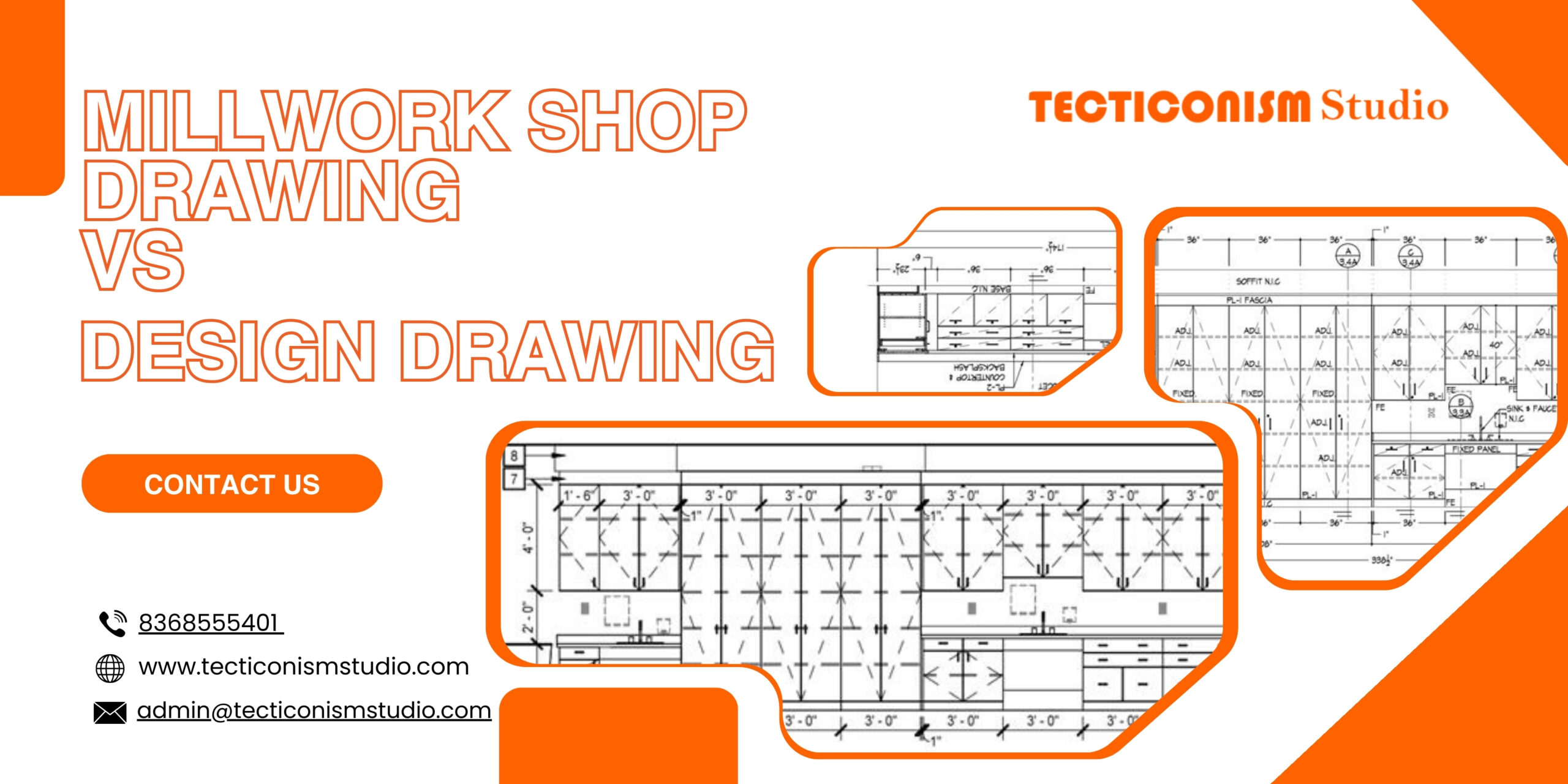
Millwork Shop Drawing vs Design Drawing: Key Differences, Process & Why It Matters
In the architecture, engineering, and construction (AEC) industry, the terms millwork shop drawing and design drawing are often used interchangeably — but they serve very different purposes. Understanding the distinction is critical for architects, interior designers, contractors, and millwork manufacturers to ensure project accuracy, cost control, and smooth execution.
If you’re planning a custom cabinetry, furniture, or interior fit-out project, this guide will clearly explain the difference between millwork shop drawings and design drawings, their roles in construction, and why both are essential for successful project delivery.
What Is a Design Drawing?
A design drawing is a conceptual or schematic representation created during the planning and design phase of a project. These drawings communicate the architect’s or designer’s vision for layout, aesthetics, dimensions, and overall functionality.
Design drawings are typically created using tools like AutoCAD, SketchUp, Revit, and BIM software, and are often developed by architectural firms such as Gensler and Perkins&Will for commercial and residential projects worldwide.
Key Characteristics of Design Drawings:
Focus on concept and intent
Show general dimensions and layout
Include floor plans, elevations, and sections
Specify materials and finishes at a high level
Used for client approvals and permits
Purpose of Design Drawings
Communicate creative vision
Secure stakeholder approval
Obtain construction permits
Provide guidance for contractors
However, design drawings do not contain the detailed fabrication instructions required to actually build millwork components.
What Is a Millwork Shop Drawing?
A millwork shop drawing is a highly detailed technical drawing created by the millwork manufacturer or fabricator. It translates design intent into precise instructions for production and installation.
These drawings are prepared after design approval and before manufacturing begins. They include exact measurements, joinery details, hardware specifications, edge treatments, and installation notes.
Key Characteristics of Millwork Shop Drawings:
Highly detailed and technical
Created for fabrication and installation
Include exact dimensions and tolerances
Specify hardware, materials, finishes, and joinery
Often include 3D views and exploded diagrams
Purpose of Millwork Shop Drawings
Guide CNC machining and workshop fabrication
Prevent production errors
Ensure site accuracy
Coordinate with MEP and structural systems
Reduce change orders
Without shop drawings, fabrication becomes guesswork — increasing the risk of costly mistakes.
Millwork Shop Drawing vs Design Drawing: Core Differences
| Feature | Design Drawing | Millwork Shop Drawing |
|---|---|---|
| Purpose | Show design intent | Guide fabrication & installation |
| Created By | Architect / Interior Designer | Millwork Manufacturer |
| Level of Detail | Conceptual / Schematic | Highly Detailed |
| Dimensions | Approximate | Exact & Verified |
| Audience | Clients, Authorities, Contractors | Fabricators, Installers |
| Stage | Design Phase | Pre-Production Phase |
Why Both Drawings Are Essential in Construction
In professional construction workflows — including large-scale commercial developments seen in cities like New York City and Dubai — both drawing types play complementary roles.
Design drawings ensure aesthetic alignment and planning compliance.
Shop drawings ensure build accuracy and execution precision.
Skipping the shop drawing stage often leads to:
Misaligned cabinetry
Incorrect material ordering
Site rework
Budget overruns
How the Workflow Typically Works
Concept Design Creation
Client Review & Approval
Tender Documentation
Millwork Contractor Awarded
Shop Drawing Preparation
Consultant Review & Approval
Fabrication
Installation
This structured workflow ensures accountability and quality control.
Frequently Asked Questions
Are shop drawings more detailed than design drawings?
Yes. Shop drawings include fabrication-level details such as joinery methods, hardware placement, exact measurements, and material specifications.
Who approves millwork shop drawings?
Typically, architects, interior designers, and consultants review and approve shop drawings before fabrication begins.
Can construction start without shop drawings?
Do shop drawings override design drawings?
No. Shop drawings must align with design intent. If discrepancies arise, clarification from the design team is required.
Final Thoughts
Understanding the difference between millwork shop drawings and design drawings is essential for achieving precision, efficiency, and cost control in construction projects.
Design drawings bring the vision to life.
Shop drawings make that vision buildable.
When both are aligned, projects move smoothly from concept to completion — reducing risk, saving time, and ensuring quality craftsmanship.
If you’re planning a millwork project, always ensure detailed shop drawings are reviewed and approved before fabrication begins. It’s not just paperwork — it’s the blueprint for accuracy.
Start Your Project
You might also like
- Understanding Tile Shop Drawings: A Comprehensive Overview
- Architecture and AI
- Trends in drafting industry to look out
- How to Create Detailed and Precise Millwork Shop Drawings
- Millwork Shop Drawings: Purpose and Benefits
- The Role of Tile Shop Drawings in Streamlining the Installation Process
- Stone Shop Drawings: Understanding the Importance and Scope
- Exploring the Art of Architectural Drafting
- Dynamic Blocks in AutoCAD
- 3D Modeling : From Concept to Creation
- Exploring AEC Drafting Standards
- Millwork Shop Drawing Standards: A Comprehensive Guide
- 10 futuristic BIM trends in the AEC Industry
- Common Mistakes to Avoid in Tile Shop Drawings
- Best CAD Drafting Services in USA
- Best 3D Real Estate Virtual Tour Service in USA
- Interior 3D Rendering Experts
- Outsource CAD Drafting Services
- CAD Drafting Services
- 3D Architectural Visualization services
- What Are CAD Drafting Services? Complete Beginner’s Guide
- Why Outsourcing Architectural Drafting Services Is Transforming the AEC Industry
- Architectural CAD Drafting services
- 3D Modeling Services in USA
- Architectural 3D Modeling Services